Hip Pain Specialist for Equestrians
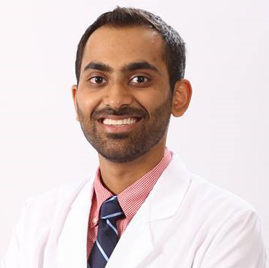
If you’re experiencing hip pain while horseback riding, don’t wait for it to worsen or limit your time in the saddle. Early evaluation can prevent long-term damage and protect your ability to train, compete, and enjoy the sport you love. Dr. Ronak Mukesh Patel, hip pain specialist serving Sugar Land, Pearland, and the greater Houston, Texas area, provides advanced diagnostics and personalized treatment plans tailored to the unique demands of equestrians. Schedule a consultation today to keep your hips healthy and your riding strong.
Hip pain is a quiet career-ender for a lot of equestrians. Riders push through discomfort for months (or years) because they assume it is “tight hip flexors,” “hip soreness”, “riding posture,” or “just part of the sport.” Persistent hip, groin, or deep hip pain in horseback riders is almost never from simple muscle soreness. More often, it comes from the hip joint itself.
In our practice, we see a number of horse-back riders who are active, strong, and have zero signs of arthritis, yet can’t ride without pain. The pattern is consistent, and the underlying causes are well-defined.
Why are horseback riders prone to hip problems?
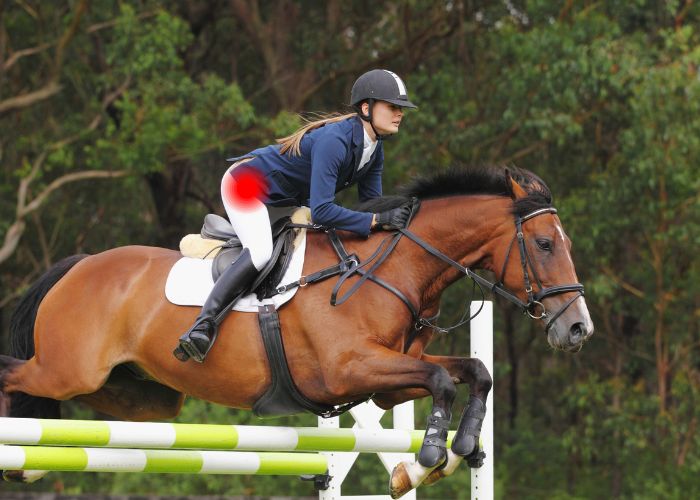
Horseback riders are uniquely prone to hip problems because the sport demands long periods of sitting in a wide, externally rotated position. This places significant stress on the hip joint, hip labrum, and on the surrounding muscles. Horseback riding creates demanding positions for the hip joint. These include:
- Long periods in hip flexion
- Significant internal rotation to maintain position
- Core/hip engagement with every stride
- Repetitive compression of the anterior hip joint
These repetitive hip motions force the ball-and-socket of the hip into positions that can lead to repetitive mechanical issues that were silently present for years. Riders in Sugar Land, Pearland, and the Houston, Texas area seeking expert evaluation for hip pain from horseback riding, can trust hip specialist Dr. Ronak Patel to diagnose the root cause of hip pain and provide targeted, rider-specific treatment options that support a safe return to the saddle.
What are the two most common structural causes of hip pain in equestrians?
1. Femoroacetabular Impingement (FAI)
FAI or femoroacetabular impingement is a common hip problem related to a misshapen hip joint characterized by too much bone on the femoral head/neck area (CAM impingement), a deep or over-covered hip socket (pincer impingement), or more commonly a combination of both. When under load, as with horseback riding, the thigh bone (femur) comes into contact with the hip labrum and cartilage, causing wear and tear.
Horseback riders feel hip pain the most when they:
- Canter
- Trot
- Mounting or dismounting
- Posting or sitting deep
- Bringing the knee toward the chest
- Rotating the hip to cue the horse
FAI is extremely common in equestrians because the sport forces the hip into the exact position where impingement occurs.
2. Labral Tears
The hip labrum is composed of collagen and is a cartilage that seals the hip socket, helping the ball of the hip to stay within the socket. When FAI causes repeated compression, the labrum can tear. A hip labral tear causes the following:
- Sharp deep hip and groin pain
- Catching, locking, or clicking
- Pain when tightening stirrups or rotating the leg
- Deep ache after riding
Some labral injuries may improve with rest alone. Sometimes, riders adapt their posture, which helps temporarily but may not solve the root problem.
What does hip pain feel like for equestrians or horseback riders?
If any of the following symptoms sound familiar, you need to come see Dr. Patel for an evaluation:
- “Pinching” in the front of the hip
- Groin tenderness after a long ride
- Pain lifting the leg into the stirrup
- A deep ache that spreads into the pelvis
- Hip tightness that lasts for prolonged periods of time
- Stiffness after sitting in the saddle
- The need to constantly stretch but never getting real hip pain relief
Most riders assume these symptoms are hip flexor strain or soreness. It usually is not. True muscle strains get better with rest and rehab. Joint problems tend to linger and are more painful impacting function and long-term joint health.
Why do horseback riders often get misdiagnosed?
Riders are athletic, flexible, and usually don’t have arthritis (visible in an x-ray). That type of profile leads many to blame soft tissue or posture issues. Many physicians skip the deeper workup, taking a “wait-and-watch” approach.
More importantly, initial evaluation of x-rays may not show a fracture, dislocation, or arthritis. However, a hip specialist like Dr. Ronak Mukesh Patel will look at the same x-rays and order additional specialized views that help evaluate for femoroacetabular impingement, hip socket anatomy and pelvic anatomy. Multiple angles are also measured to understand the morphology or shape of the hip.
If someone under 60 has persistent groin or anterior hip pain, especially with rotation, the probability of labral pathology or FAI is common.
The good news? When caught early, these are highly treatable hip problems with excellent outcomes.
How do we diagnose hip pain in equestrians?
Our evaluation is straightforward and efficient:
- Focused history and exam specific to hip pain
- Hip X-rays including AP pelvis, Dunn, and false profile views: These are critical for identifying FAI patterns that standard X-rays may miss
- MRI arthrogram if a labral tear is suspected
- CT scan with 3D reconstructions including evaluation of femoral (thigh bone) and acetabular (hip socket) version (orientation).
- Movement and riding-specific assessment
What are the Treatment Options for Equestrian Hip Pain?
Nonoperative Management
- Rest
- Activity Modification – movement retraining for posting, sitting trot mechanics, and mount/dismount patterns
- Targeted hip mobility (not random stretching)
- Strengthening focused on pelvic control, core, and gluteal function
- Ultrasound-guided injections when indicated (steroid and platelet-rich plasma, PRP)
Arthroscopic Hip Surgery for Equestrian Hip Pain:
If FAI and labral pathology are significant, hip arthroscopy is the gold standard. I do postless arthroscopic hip surgery, which gives horseback riders a quicker recovery time with a less invasive approach. If needed I can perform:
- Labral repair – repairs and stabilizes the labrum
- Femoroplasty – corrects the bony impingement (CAM/pincer) by shaving bone with specialized tools
- Arthroscopy to restore the smooth mechanics of the joint
Most active riders get back to the saddle with better hip function than they’ve had in years—often realizing their “tightness” was structural all along.
Why shouldn’t riders ignore the pain?
Ignoring FAI or a labral tear doesn’t make it go away. There is an association between FAI and osteoarthritis of the hip. The longer it is present, the more wear and tear on the hip which may lead to arthritis. As the hip compensates over time, the more likely riders develop chronic pain patterns, gluteal overload, or secondary back issues.
You don’t need to stop riding or even have surgery right away. You just need a proper diagnosis and the right orthopedic plan for your hip pain.
If You’re an Equestrian With Hip Pain, We Can Help
Our practice specializes in young and active adults with hip pain, especially those with:
- No arthritis
- Groin/anterior hip symptoms
- Pain with flexion and rotation
- Possible FAI or labral tears
If riding isn’t as comfortable as it used to be—or if you’re modifying your position to avoid pain—come in before it snowballs into a bigger problem.
You don’t have to give up the sport you love.
You just need your hips working the way they’re meant to, without pain.